
28+
Years Of Experience
Shut Off Your Circuit Breaker Issues
Call us for circuit breaker repairs and installations in Claremore, Owasso & Tulsa, OK
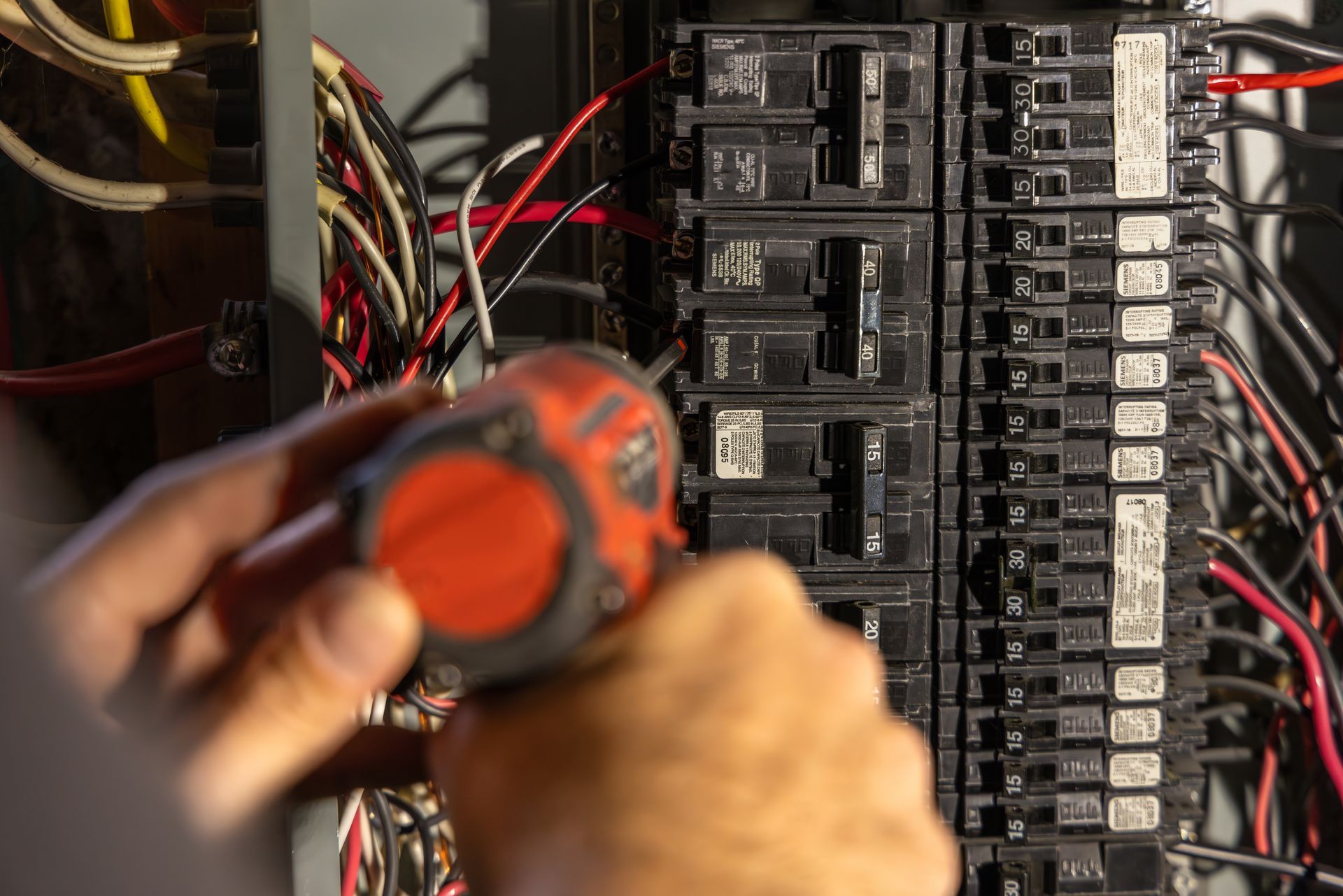
Keep your home and your family safe by making sure your circuit breaker is up to code. When the circuit breaker in your home needs attention, you can turn to Jet 5 Electrical Services.
We provide commercial and residential circuit breaker services, including:
- Circuit breaker installations
- Circuit breaker repairs
- Circuit breaker upgrades
Contact us today to schedule your circuit breaker installations or repairs. Our goal is to make sure your family lives in a home that's safe and sound, so you can depend on our experienced electricians for reliable circuit breaker repairs.
3 Common Causes Of A Recurring Circuit Break
Are you tired of grabbing the flashlight and making your way through the dark basement to flip your circuit breaker? If you have a recurring circuit break, here are a few common culprits:
- Overloaded circuit
- Short circuit
- Ground fault
Contact your local electrician to provide top-notch circuit breaker repairs.
Protection Systems That Isolate Faults Correctly
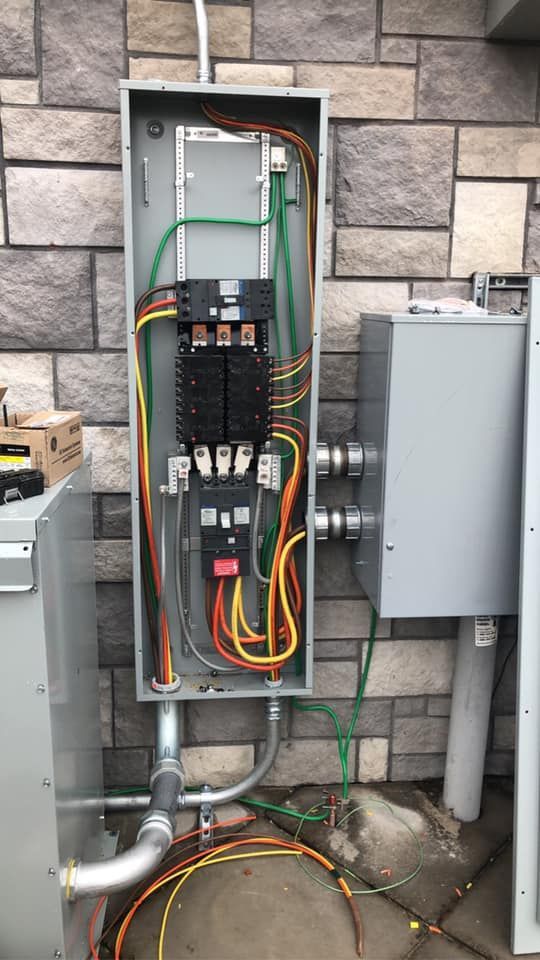
Circuit breaker services in Claremore for commercial panels experiencing nuisance trips or outdated protection devices
Circuit breakers that trip repeatedly during normal operations point to one of three common conditions: overloaded circuits carrying more current than their rating allows, short circuits where hot conductors contact grounded metal or neutral wires, or ground faults where current leaks through damaged insulation to conductive surfaces. Each condition requires a different solution, and replacing the breaker without addressing the underlying cause simply results in continued failures. Jet 5 Electrical Services provides circuit breaker installations, repairs, and upgrades for Claremore commercial facilities where protection devices must coordinate with upstream and downstream equipment to isolate faults without cascading outages.
Overloaded circuits occur when added equipment increases current draw beyond the circuit's design capacity, common in older buildings where technology loads have multiplied since original construction. Short circuits typically produce immediate, high-magnitude trips accompanied by visible sparking or burning smells. Ground faults develop gradually as insulation deteriorates from heat, moisture, or physical damage, causing intermittent trips that worsen over time as the fault path's resistance decreases.
Request an evaluation if breakers trip without obvious correlation to equipment use or environmental conditions.
What Proper Breaker Service Accomplishes
Circuit breaker service involves testing trip curves to verify the device operates within manufacturer specifications, measuring load current to determine if the circuit carries continuous amperage near or above the breaker rating, and inspecting connections for heat damage indicating high resistance at terminals. Upgrading outdated breakers includes replacing standard thermal-magnetic types with arc-fault or ground-fault devices required for current code compliance and improved protection against electrical fires.
Once service completes, circuits remain energized during equipment startup surges that previously caused nuisance trips, while still opening immediately when actual fault conditions occur. You'll see fewer interruptions to operations caused by breakers reacting to harmonic currents from electronic loads or motor inrush that exceeds instantaneous trip thresholds but doesn't represent a true overload. Upgraded panels provide expansion capacity for adding circuits without replacing the entire assembly, and breakers match the specific fault current available at that point in the distribution system to interrupt safely without catastrophic failure.
Installations account for temperature rise in enclosed panels where multiple breakers operate simultaneously, a consideration in Claremore facilities where ambient temperatures affect how much current conductors and terminations can carry without exceeding insulation ratings. Ground fault protection on equipment circuits prevents prolonged arcing faults that standard breakers may not detect until significant damage occurs to raceways and connected devices.
Questions Property Managers Ask About Breaker Work
Understanding why breakers trip helps distinguish between service issues and normal protective operation.
What causes an overloaded circuit beyond simply adding too many devices?
Overloads develop when equipment operates simultaneously rather than staggered, when motors cycle frequently with high starting current, or when conductors heat up from poor connections and can no longer carry their rated current without the breaker reacting to the elevated temperature at its thermal element.
How do short circuits differ from ground faults in terms of symptoms?
Short circuits produce immediate, forceful trips often with visible arcing or tripped GFCI devices upstream, while ground faults cause intermittent tripping that may clear temporarily when humidity drops or equipment cools, then recur when moisture or heat recreates the conductive path to ground.
When should breakers be replaced rather than reset?
Breakers that trip and reset successfully may still require replacement if they've interrupted high fault currents that damage internal components, if they show discoloration from heat at terminals, if the handle feels loose or doesn't click definitively into position, or if they're obsolete types incompatible with modern arc-fault or GFCI requirements.
What determines the correct breaker size for a circuit?
Breaker amperage must coordinate with conductor size and the loads connected, typically limited to 80 percent of the breaker rating for continuous loads operating three hours or longer, with higher ratings allowed for motors based on NEC tables that account for locked-rotor and running current characteristics specific to motor horsepower and voltage.
Why do some facilities in Claremore need selective coordination studies?
Buildings where power loss affects life safety systems or critical operations require breakers with time-current curves coordinated so downstream devices trip before upstream breakers, isolating faults to the smallest affected area rather than de-energizing entire distribution panels during a localized problem.
Jet 5 Electrical Services evaluates recurring breaker trips to determine whether the issue involves the protective device, the circuit loading, or fault conditions developing in connected equipment. Set up a diagnostic appointment to measure actual operating conditions rather than assuming breaker behavior indicates proper protection or malfunction.