
28+
Years Of Experience
Energy-Efficient Lighting Is a Bright Idea
We handle lighting retrofits in Claremore, Owasso & Tulsa, Oklahoma
Replacing components of your lighting setup with more efficient parts can do wonders for your home or business-and your wallet! Jet 5 Electrical Services offers lighting retrofit services in Claremore, Oklahoma. We can brighten up your bank account by replacing incandescent lightbulbs and outdated lighting systems. Your interior will shine, and so will your savings account. Move forward with a lighting retrofit service from our electricians in Claremore, Owasso & Tulsa, OK today.
3 Reasons To Flip The Switch On Your Retrofit
New lighting can have significant positive effects on your family and employees. Call our specialists to replace those outdated light bulbs and fixtures with CFLs and LED lighting systems. Soon, you'll enjoy:
- Lower energy bills
- Tax savings and rebates
- Boosted productivity in your office space
Don't drain your bank account on an outdated lighting system. Experience the difference with new lighting from Jet 5 Electrical Services. Learn more about the benefits of better lighting by calling our electricians today.
Efficient Systems That Reduce Operating Costs
Lighting retrofit services in Claremore for commercial facilities replacing outdated fixtures with modern efficient technology
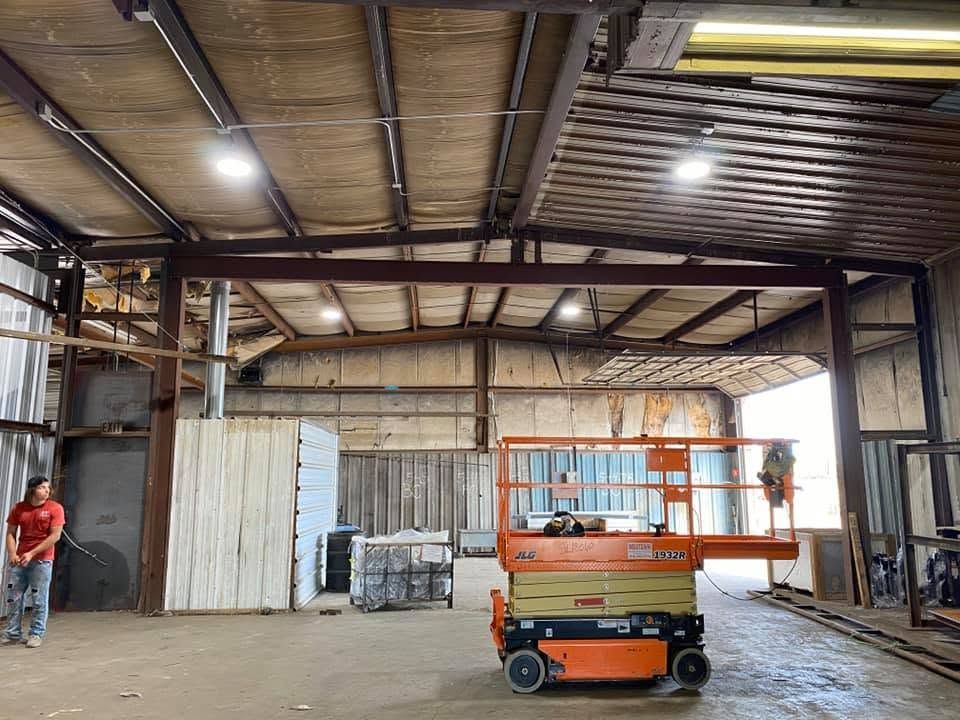
Older commercial lighting systems using T12 fluorescent or metal halide fixtures consume significantly more power than current LED equivalents while producing less usable light and requiring frequent relamping that adds labor costs to energy waste. Retrofitting involves replacing entire fixture assemblies or converting existing housings to LED-compatible configurations that reduce energy consumption by sixty to eighty percent while improving light quality and distribution. Jet 5 Electrical Services completes commercial lighting retrofit projects in Claremore, addressing warehouses, retail spaces, educational facilities, and manufacturing environments where lighting represents a major portion of electrical load and operational expense.
Retrofits address facilities paying excessive utility costs from inefficient lighting, experiencing frequent lamp failures that interrupt operations, or needing better visibility for detailed work without adding fixtures or increasing energy use. The conversion includes evaluating existing light levels against task requirements, selecting LED fixtures with appropriate color temperature and distribution patterns, and integrating control systems that adjust output based on occupancy or daylight availability.
Schedule a facility lighting assessment to measure current power consumption and identify retrofit options based on your operational hours and utility rate structure.
What Changes After Lighting Upgrades Complete
Retrofit work involves removing ballasted fluorescent or HID fixtures and installing LED assemblies with integral drivers, upgrading wiring where existing conductors can't handle increased circuit capacity from adding fixtures previously limited by transformer or panel constraints, and programming control systems to deliver appropriate light levels throughout occupied periods. Facilities with high ceilings benefit from LED fixtures that deliver full output immediately without the warmup period required by metal halide systems that take minutes to reach operating brightness after power interruptions.
After installation, you'll notice consistent light output that doesn't diminish over time the way fluorescent lamps fade gradually until replacement, eliminating the uneven brightness across a space where some fixtures have new lamps while others wait for the next maintenance cycle. Energy bills drop measurably in the first billing period following retrofit completion, particularly in facilities operating lighting sixteen or more hours daily. Heat output from fixtures decreases substantially, reducing cooling loads during warmer months and improving comfort in spaces where workers operate near lighting assemblies.
Control integration allows scheduling that automatically adjusts lighting based on occupancy patterns, preventing energy waste in areas unused during off-shifts while maintaining safety illumination in egress paths and perimeter zones. Dimming capability extends lamp life beyond the already-long LED service intervals and provides flexibility to reduce light levels during cleaning or maintenance activities when full output isn't necessary.
Common Questions About Retrofit Projects
Lighting upgrades affect both operating costs and work environment quality across commercial properties.
What factors determine whether to retrofit existing fixtures or replace them entirely?
Housings in good structural condition with compatible mounting and optical characteristics can often be retrofitted with LED conversion kits, while fixtures with damaged reflectors, obsolete mounting systems, or incompatible distributions require complete replacement to achieve proper light levels and uniformity.
How do LED retrofits affect electrical panel capacity?
LED fixtures draw substantially less current than the fluorescent or HID systems they replace, often freeing panel capacity for additional circuits or equipment loads that existing infrastructure couldn't support, though control systems with multiple zones may require additional circuit positions for switching.
When should lighting controls be included in retrofit work?
Facilities operating lighting during unoccupied hours, spaces with significant daylight contribution during portions of the day, or operations with varying activity levels across different zones benefit from occupancy sensors, photocells, or programmable systems that optimize energy use beyond fixture efficiency alone.
What determines appropriate color temperature for commercial LED lighting?
Task areas requiring color discrimination such as retail displays or inspection work typically use 3500K to 4000K for neutral white appearance, while warehouses and manufacturing often use 5000K for crisp visibility, and hospitality or residential-style commercial spaces may prefer 2700K to 3000K for warmer tones.
Why do some Claremore facilities see better returns on retrofit investment than others?
Buildings with long operating hours, high utility rates, or difficult access for maintenance benefit most from LED conversion since energy savings accumulate faster and reduced relamping frequency delivers greater labor cost reduction than facilities operating lighting only during standard business hours.
Jet 5 Electrical Services evaluates existing lighting systems against current energy codes and operational requirements, then designs retrofit solutions that deliver measurable cost reduction. Request a lighting analysis to compare retrofit options and projected savings based on your facility's specific use patterns.