28+
Years Of Experience
Residential & Commercial Electrical Services by Jet5 Electrical Services
Trusted Electricians in Claremore, Owasso & Tulsa, OK
Electrical repairs are not DIY jobs. When your home or business is having electrical problems, you need to call the professionals at Jet 5 Electrical Services. We offer commercial and residential electrical repairs and installations. Because we have nearly three decades of experience, you can be sure that our electricians will get the job done quickly without sacrificing quality.
Here are a few signs that it's time to call an experienced electrician:
- Dead outlets
- Flickering electrical fixtures
- Faulty circuit breakers
Contact Jet 5 Electrical Services for a free estimate on any electrical repair or installation in the Claremore, Owasso & Tulsa, OK areas.
We're committed to your home
Our electricians are committed to you and your home's electrical system, which is why we offer exceptional customer service every time. Call today to get professional help from a residential or commercial electrician.
Systems That Keep Facilities Running Reliably
General electrical services in Claremore for commercial properties with complex power distribution and control requirements
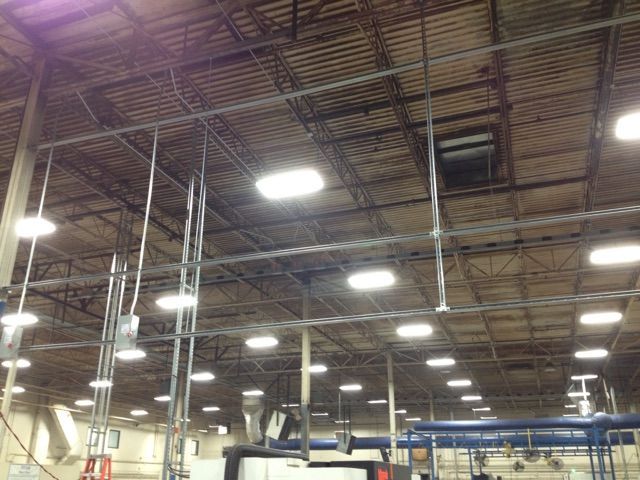
Jet 5 Electrical Services handles general electrical services across commercial and industrial facilities in Claremore, covering everything from medium voltage installations to motor control systems. The work addresses facilities that depend on specialized power infrastructure, including warehouses with conveyor systems, manufacturing plants with VFD-controlled equipment, and retail locations requiring precise lighting controls. You'll notice systems that operate consistently under load without nuisance trips or voltage fluctuations that disrupt production schedules.
These services address the electrical infrastructure required for educational buildings, hazardous environments, manufacturing operations, and tenant finish-out projects where multiple control systems must integrate reliably. The work includes medium voltage switch gear installation, PLC wiring and termination for automated processes, paralleling switch gear that coordinates multiple power sources, and lightning protection systems designed for structures with sensitive electronic equipment.
Schedule a facility assessment to identify infrastructure requirements specific to your operations and regulatory classifications.
What Proper Commercial Installation Requires
Medium voltage installation demands termination techniques that prevent partial discharge and corona formation at connection points, which can degrade insulation over years of operation. Low voltage control systems for lighting and HVAC require conduit routing that separates control wiring from power conductors to prevent electromagnetic interference that causes erratic operation in automated systems.
After installation completes, you'll see conveyor systems that start and stop smoothly without motor inrush current causing voltage sags elsewhere in the facility. Dimmer racks controlling stage or architectural lighting respond predictably across their full range without flicker or audible hum from incompatible load types. Generator systems transition between utility and standby power without interrupting critical loads, and motor control centers deliver coordinated protection that isolates faults to specific circuits rather than cascading through adjacent equipment.
The scope includes evaluating existing infrastructure capacity before adding new loads, which prevents overloading feeders or transformers that appear adequate on paper but operate near thermal limits during peak demand. For hazardous locations, installation follows NEC Article 500 classifications that match wiring methods and enclosure ratings to the specific class and division of flammable atmospheres present.
What Facility Managers Need to Know
Commercial electrical work varies significantly based on facility type and the control systems already in place.
What distinguishes medium voltage work from standard commercial installation?
Medium voltage systems operate above 600 volts and require specialized termination procedures, including stress cones or heat-shrink boots that manage electrical field concentrations at cable ends, along with high-pot testing to verify insulation integrity before energizing circuits that can arc across significant air gaps if improperly terminated.
How do VFD installations affect other equipment in the facility?
Variable frequency drives generate harmonic currents that can overheat neutral conductors and transformers, requiring harmonic analysis and sometimes line reactors or filters to prevent nuisance tripping of upstream breakers and premature failure of power factor correction capacitors elsewhere in the distribution system.
When should paralleling switchgear be considered for generator systems?
Facilities requiring more backup capacity than a single generator can provide, or operations needing maintenance capability without losing standby power, benefit from paralleling gear that synchronizes multiple generators and manages load transfer between utility and emergency sources without interrupting critical processes.
What preparation does a commercial tenant finish-out require electrically?
Build-outs need coordination with base building capacity to verify available amperage at the electrical room, then design of branch circuit layouts that accommodate modular furniture systems and technology infrastructure while meeting energy code requirements for lighting power density in Claremore's jurisdiction.
How does lightning protection integrate with existing electrical systems?
Protection systems require dedicated grounding electrodes bonded to the building's main electrical ground to equalize potential during strikes, preventing side-flashing between dissimilar ground systems that can damage sensitive controls and communication equipment connected to the facility network.
Jet 5 Electrical Services evaluates infrastructure requirements based on facility operations and equipment already installed. Request a consultation to review planned expansions or control system upgrades before equipment arrives on site.